Looking for a mini-farm in Serendipity Farms can feel exciting and a little tricky at the same time. You may picture five peaceful acres, a barn, and room for horses or hobby farming, but rural property value often comes down to what the land can actually do day to day. This guide will help you look past the pretty gate and understand zoning, usability, utilities, and horse-ready features in the 34219 area so you can buy with confidence. Let’s dive in.
Why Serendipity Farms Searches Are Different
In the 34219 area, a Serendipity Farms search is often more like a north Manatee County or Duette acreage search than a standard neighborhood search. That matters because mini-farm buying is less about house style alone and more about land use, access, infrastructure, and layout.
This area is also shaped by its rural setting and nearby open land. Duette Preserve, which spans more than 21,000 acres, is a major local landmark and is open daily to pedestrian, bicycle, and equestrian traffic outside hunt weekends. If nearby trail access is part of your plan, it is smart to confirm seasonal availability instead of assuming it is always open on demand.
Start With Zoning and Land Use
Before you fall in love with a barn or fenced pasture, confirm the parcel’s zoning and future land use. In Manatee County, the General Agriculture district is intended to preserve agricultural land, support rural residential development at no more than 0.2 dwelling units per acre, and protect agricultural areas from incompatible uses.
County code also notes that agricultural districts provide for agriculture and agricultural uses on minimum five-acre and one-acre lots, while A-1 is meant for short-term agricultural uses and transition areas. That means two properties that look similar online may have very different use options in practice.
You should also ask whether the parcel has overlays, deed restrictions, or HOA rules. Even if the acreage looks ideal, those parcel-specific factors can affect barns, sheds, paddock structures, and other improvements you may want to add or modify.
Why Five Acres May Not Feel Like Five Acres
One of the biggest surprises for buyers is that lot size and usable land are not always the same thing. In Manatee County, setbacks are measured from the property line, structures cannot be placed in easements or buffers, and wetlands do not count toward lot size in the usual way.
So if you are looking at a five-acre parcel, do not assume all five acres are fully buildable or equally usable. Wetlands, drainage patterns, easements, and required setbacks can reduce where you can place a home, barn, arena space, or fencing.
This is why upland versus wetland area is one of the most important questions to ask during your search. A property with a better layout may be more functional than a larger tract with more constraints.
What Mini-Farms Here Often Include
Nearby Duette-area listing examples show that local mini-farm inventory often includes more than just a home on acreage. Buyers commonly see manufactured or ranch-style homes on about five acres paired with practical utility features that support horses, equipment, or hobby farming.
Features you may encounter include:
- Detached workshops
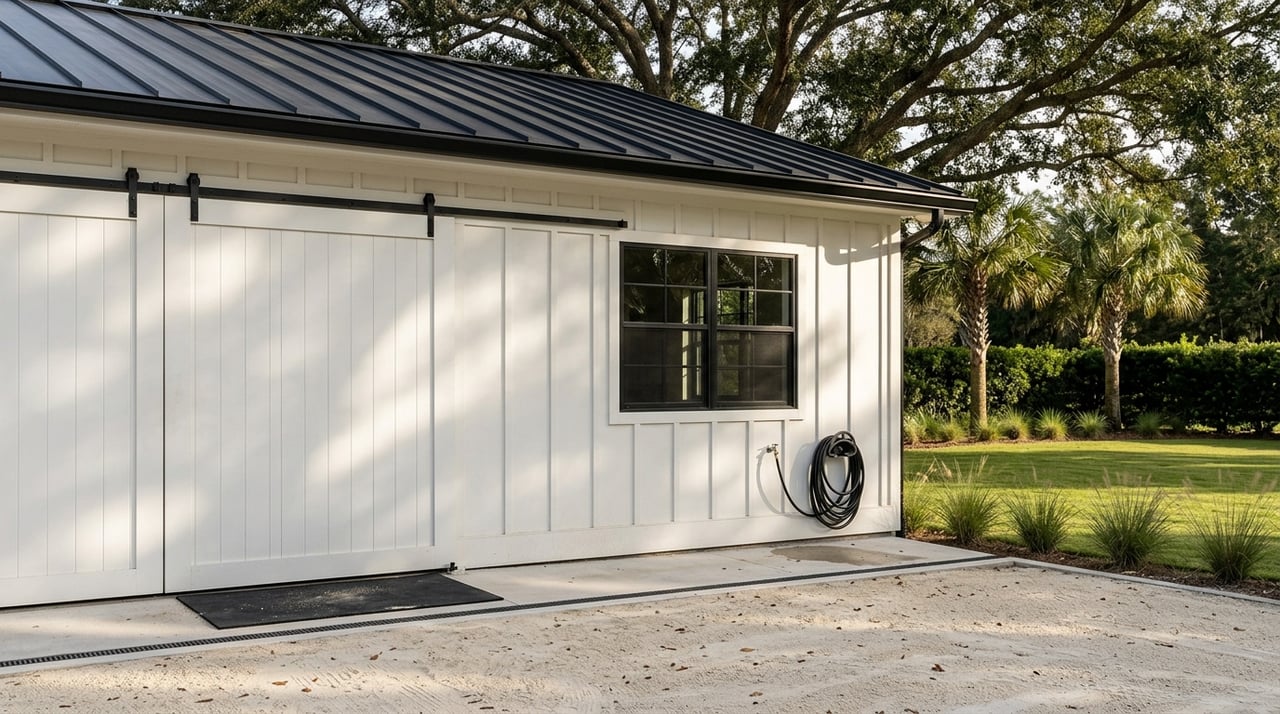
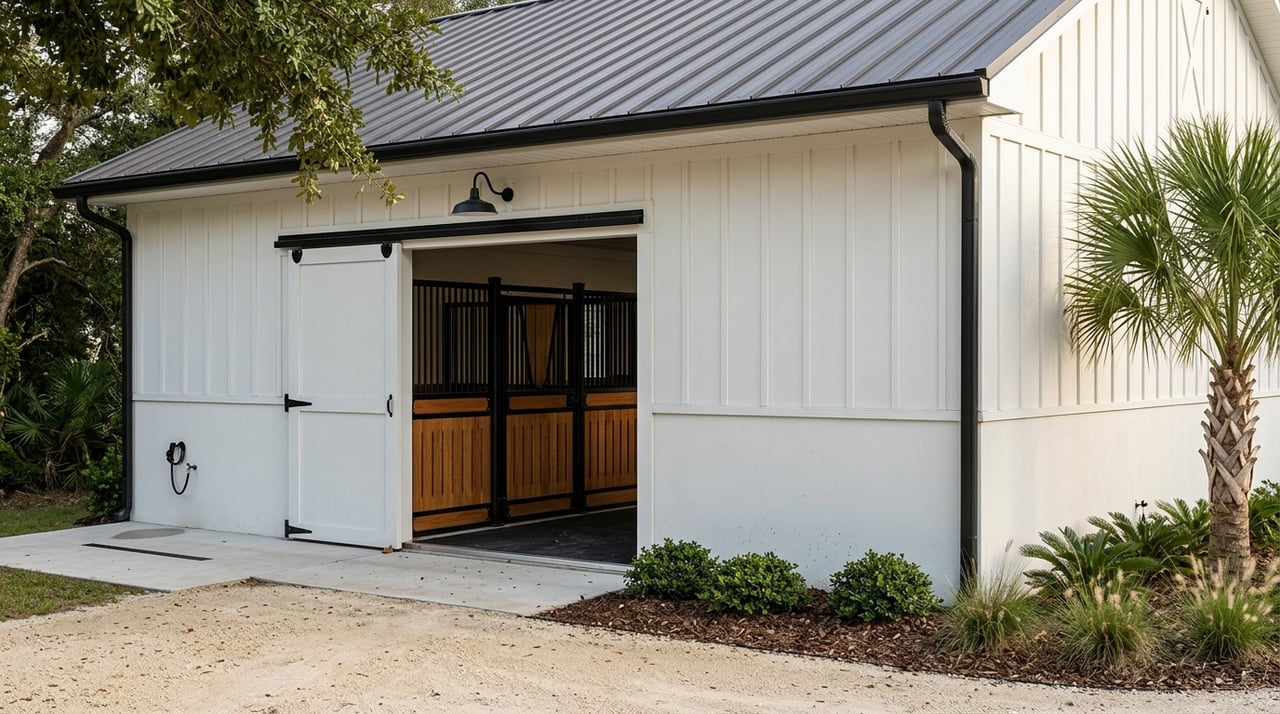
- Barns with 3 to 5 stalls
- Tack or feed rooms
- Fenced pastures and paddocks
- Round pens
- Open-air storage buildings
- Chicken coops
- RV or utility hookups
- Existing well and septic systems
- Gated entries and perimeter fencing
Some nearby examples have included a 5.63-acre mini-farm with a 5-stall horse barn and climate-controlled tack and feed room, a 5-acre property with a 3-stall barn and pond, and a 5.19-acre tract with paved road frontage, power, well, and septic already in place. These examples are not a market average, but they are useful for understanding the type of amenity mix you may need to evaluate.
Evaluate the Land for Horse Use
If horses are part of your plan, pasture layout deserves as much attention as the house and barn. Florida pasture can support horses nearly year-round, but horse pasture planning is not the same as cattle pasture planning because horses need higher-quality, less fibrous forage.
UF/IFAS notes that a mature horse may need about 2 to 2.5 acres on less productive sites or 1 to 1.5 acres on productive, well-managed pasture during summer. Once stocking goes above one horse per acre, pasture usually functions more as an exercise area than a primary feed source.
That means your buying decision should include more than total acreage. You should consider soil drainage, grass quality, paddock layout, and whether the property’s setup matches the number of horses you hope to keep.
Ask About Rotational Grazing
A strong mini-farm layout often includes cross-fencing that supports rotation. UF/IFAS recommends rest periods between grazing events, avoiding grazing below about 3 inches, and using a sacrifice lot for water, feed troughs, and shade structures.
More paddocks can improve grazing control, but they also increase fencing needs and maintenance. When you tour a property, try to picture the daily flow of feeding, turnout, mowing, and manure handling, not just the visual appeal.
Check Shade and Ventilation
Florida heat and humidity can change how well a mini-farm functions. UF/IFAS notes that humid climates can limit evaporative cooling in horses, which makes shade and airflow especially important.
When you walk a property, inspect whether barns, run-in sheds, wash areas, and tack rooms have practical ventilation and easy access to water. UF/IFAS recommends ventilation systems that provide at least one air change per minute, so an attractive barn should also be a comfortable and workable one.
Make a Manure Plan Part of the Decision
Manure handling is not glamorous, but it is part of smart mini-farm buying. UF/IFAS notes that a 1,000-pound horse produces roughly 35 to 50 pounds of manure per day.
Before closing, think through whether the property has a workable system for composting, storage, or haul-off. A beautiful setup can become frustrating fast if the day-to-day maintenance plan is not realistic.
Put Fencing Under the Microscope
Fencing is one of the most important features on a mini-farm, and it should be evaluated carefully. Florida law does not impose a duty on livestock owners to fence, but owners may still face civil or criminal liability if animals stray onto public roads.
That is why you should inspect more than just whether fencing exists. Look at perimeter fencing, cross-fencing, gate placement, latch quality, openings, and general condition.
You should also confirm boundary lines so you know the fence is where you think it is. A fence that looks solid during a quick showing may still need repair, repositioning, or upgrades to fit your intended use.
Verify Utilities Before You Commit
For rural property, utility verification should happen early. Manatee County Utilities maintains an infrastructure map for potable water, sanitary sewer, reclaimed water, fiber optic conduit, traffic conduit, and street lighting, and that can help confirm what serves the parcel.
Many mini-farm properties in the area may rely on private systems instead of standard suburban utility connections. That makes it especially important to verify service rather than rely on listing assumptions.
Private Wells Need Testing
If the property uses a private well, the owner is responsible for making sure the water is safe to drink. Florida health guidance does not require private-home well sampling when a home is sold, but it strongly recommends testing.
At closing, the Florida Department of Health recommends testing for coliform bacteria, nitrates, and lead. This matters on mini-farms because bacteria and nitrate can reach groundwater through poorly maintained septic systems, livestock areas, fertilizer use, or poorly constructed wells.
Septic Systems Deserve a Closer Look
If the property uses septic, ask for a voluntary septic inspection and assessment. Florida health guidance for homebuyers says the inspection should be done by a state-licensed septic tank contractor or plumber, or a certified environmental health professional.
The guidance also says tanks should be pumped and visually inspected, and drainfields should be probed. In Manatee County, the county health department still handles septic permitting and inspections, which is helpful to know if questions come up about repairs or modifications.
Confirm Access and Everyday Functionality
Access can make or break a mini-farm. County guidance says structures cannot be placed in easements or buffers, and planned development agriculture guidance states that every dwelling unit or other permitted use must have vehicular access to a public street and adequate emergency vehicular access.
For you, that means confirming more than whether a driveway exists. You should ask about recorded ingress and egress, private-road maintenance responsibility, trailer turn-around space, driveway width, and whether emergency vehicles can reach the house, barn, and pasture areas.
A property can look private and peaceful online, but poor access can create real problems for trailers, deliveries, contractors, and daily use. Practical movement matters.
Smart Questions to Ask on a Showing
The best showing questions focus on whether the property is truly usable for your goals. Rural and equestrian properties are highly parcel-specific, so direct questions can save you time and money.
Bring this checklist with you:
- What is the exact zoning and future land use?
- How much of the acreage is upland versus wetland?
- Are there any overlays, deed restrictions, or HOA rules?
- Were the barn, sheds, carports, and paddock structures properly permitted?
- Is the property on county water and sewer or private well and septic?
- Who maintains the road and driveway?
- Is there a true sacrifice paddock?
- Is there enough cross-fencing for rotation?
- What is the current manure handling plan?
- Are shade, ventilation, and water access adequate in the barn and turnout areas?
These questions help you evaluate function first. Cosmetic upgrades are easier to change than land layout, drainage, or utility limitations.
Why Local Guidance Matters
Mini-farm purchases usually involve more moving parts than a typical residential purchase. You are not just evaluating bedrooms and finishes. You are also evaluating land use, structures, horse infrastructure, access, and the workability of the property over time.
That is where an experienced, hands-on advisor can make a real difference. When you are comparing acreage properties in the 34219 area, clear guidance can help you focus on the parcels that fit your lifestyle instead of chasing features that may not perform the way you expect.
If you are thinking about buying a mini-farm in Serendipity Farms or the greater Duette area, Pamela Link can help you evaluate the details that matter most and move forward with confidence.
FAQs
What makes a Serendipity Farms mini-farm search different from a regular home search?
- In the 34219 area, you are often evaluating rural acreage in the north Manatee County and Duette area, where zoning, wetlands, access, fencing, and utilities can matter as much as the home itself.
How much land do you need for horses on a mini-farm in Manatee County?
- UF/IFAS says a mature horse may need about 2 to 2.5 acres on less productive sites or 1 to 1.5 acres on productive, well-managed summer pasture, so the answer depends on pasture quality and management.
Why should buyers ask about wetlands on a Serendipity Farms property?
- Wetlands can reduce how much of the land is practically buildable or usable because structures cannot go in certain constrained areas and wetlands do not count toward lot size in the usual way.
What should buyers inspect on fencing at a mini-farm property?
- You should check perimeter fencing, cross-fencing, gates, latches, openings, condition, and boundary alignment so you understand both daily function and potential safety issues.
What utility questions matter most for mini-farms in the 34219 area?
- You should verify whether the property uses county utility service or private well and septic, and if it uses private systems, well-water testing and a septic inspection are important parts of due diligence.
What showing questions help buyers judge whether a mini-farm is truly functional?
- Ask about zoning, uplands versus wetlands, permits for outbuildings, road maintenance, access for trailers and emergency vehicles, cross-fencing, sacrifice paddocks, manure handling, and barn shade and ventilation.